
| Game Name | Hungry Mosquito Escape |
| Category | Live Escape |
| Game Tags | Hungry Mosquito Escape |
Puzzle Solving Mechanics in Escape Games Using Randomized Symbol Patterns
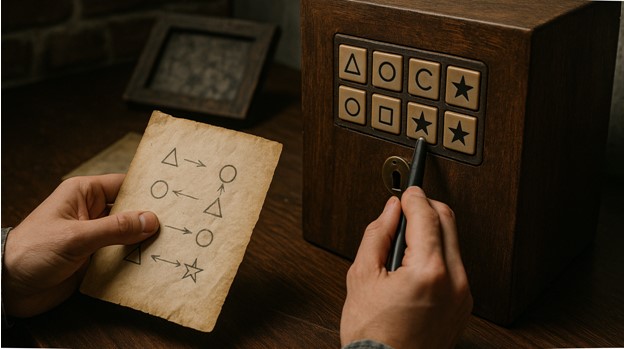
Escape games have, in the past several years, carved out this niche genre packed with frantic clue-solving and a whole lot of teamwork. The thing is, at the center of many of these puzzles, you’ll often find randomized symbol patterns. Maybe it sounds a bit specialized, but this mechanic really tends to test more than just memory, players are nudged into observation and deduction, and sometimes, the group dynamic gets a workout too.
According to numbers from EscapeGamesGlobal, it’s estimated that since 2018, well over half, probably around 60% or so, of commercial escape rooms incorporate symbol-based randomization for at least one challenge per session. Not too surprising, I guess, when players regularly deal with all sorts of grids, spinning dials, or chunky padlocks that can’t be cracked by simple recall.
Instead, the focus drifts toward picking apart subtle visual cues or working out shifting patterns, things that can change each time you play. Developers seem to lean into this unpredictability. Keeps events lively, and even regulars rarely see the same thing twice.
Pattern recognition in randomized symbol puzzles
If you walk into almost any professionally designed escape room, pattern recognition is pretty much unavoidable. Symbols, classic shapes, odd icons, sometimes just weird markings, get scattered across wall panels and props in what, at first glance, feels like a total jumble — almost like those gaudy rainbow riches-style casino slot screens, where the colour is mostly there to distract you. No sense, just noise. Yet someone always spots a link eventually: a repeating design, shapes that seem to call out for alignment, or maybe just a sneaky sequence in a corner nobody wanted to check.
Based on what Ice Break Escape Room has shared, about three-quarters of their rooms throw these types of observation-based puzzles into the mix. One example: you’re looking for a specific run of star–triangle–circle, but the whole area is cluttered with extra symbols that are just there to throw you off. These distractions are often intentional; it isn’t really designed to be easy or obvious.
You end up sifting through a lot of irrelevant noise. Important clues are mixed right into the background, with distinctive colors or shapes barely flagged by hidden tips (if you spot them at all). Memorizing won’t really help, at least, not as much as actually analyzing what you see and making connections on the fly. It’s that kind of mental shift that seems to count most.
Online crossover and code substitution mechanics
There’s been a noticeable spillover of symbol puzzles out of physical escape rooms into digital spaces, from puzzle apps to full-blown online challenges. Away from digital slots, modern escape rooms often build in substitution ciphers, swapping those simple icons for extra layers of code. Instead of facing a numeric padlock, a team could wind up sorting through a table where every symbol translates into something totally different, a letter, maybe, or a number, making it trickier to draw a straight line between clue and answer.
Some resources, like EscapeRoomGeeks, mention that designers now favor modular ciphers keyed differently for each session. Useful for keeping codes from getting stale, and it’s also a safeguard against players memorizing answers after a single run. Usually, solving these demands gathering clues from all over, a chart here, environmental hint there, just to get the conversion right.
Systems like this tend to block brute-forcing and push players toward deduction instead, with locks or sound effects giving real-time hints about their progress (or mistakes). It’s perhaps worth noting the digital crossover: plenty of online titles, not just physical escape rooms, recognize effective pattern-matching and adaptability as rules evolve dynamically..
Physical manipulation and integrated feedback
There’s something about a real, physical puzzle that digital simply can’t match. In escape rooms, it’s pretty common to run into a contraption, cryptex, spinning dials, or rings, covered in randomized symbols. These aren’t just for show; the lock won’t budge unless everything lines up exactly right.
Static codes fade into the background here because suddenly, you’re juggling clues while literally twisting and pushing hardware into place. Amaze Escape’s stats suggest something like 40% of their advanced rooms use this particular mechanic, usually to prevent answer-sharing or spoilers from friends who played last week.
Physical feedback is a big part of the vibe; think clicks, chunk sounds, even surprise lights that flip on when you get close. Mess up the configuration? Sometimes there’s a reset, or the puzzle locks you out for a moment, good incentive to double-check before committing to that last spin. Of course, not everything stands out.
Designers love to tuck important symbols into background art, props, or even the carpet pattern, almost invisible unless someone in the group bothers to check up-close. The end result doesn’t feel staged; it’s more about acknowledging players who pay close attention to subtle details.
Role of collaboration and randomization in escape room dynamics
Efficient randomized-symbol escape puzzles depend on group dynamics: nobody really solves these alone, roles get split, someone pushes on cipher interpretation while someone else searches physical space, and multi-sensory layers (sound, tactility mapped to symbols) accelerate break-throughs. Randomness is core: symbol shuffles, clue relocation, micro rule-tweaks erase “spoilers” and neutralize repeat-run advantage , forcing interpretive skill, not memory.
Some rooms increase cross-dependency (multi-zone forced info passing) and format diversity (visual, tactile, timed) to keep cognitive frames shifting, which prevents routine heuristics from dominating, preserves attention, and yields high replayability. Designing these systems demands observation design, puzzle logic engineering, physical affordance craft, and team game-theory literacy: randomization is not decoration, it is the difficulty budget allocator.
Rooms that embrace this tend to hit “always new, never solved” loops that keep players hooked. Understanding software development methods and market trend analysis remains essential context for shipping competitive digital products at all.


Wowescape is a Free online escape games offer a fantastic way to challenge your mind, solve puzzles, and embark on thrilling adventures from the comfort of your computer . From classic single-room puzzles to complex, multi-room sagas, the genre has something for everyone. Whether you're a fan of point-and-click mysteries, a lover of horror, or just looking for a fun mental workout, here's a breakdown of what you can expect and some popular titles to get you started.